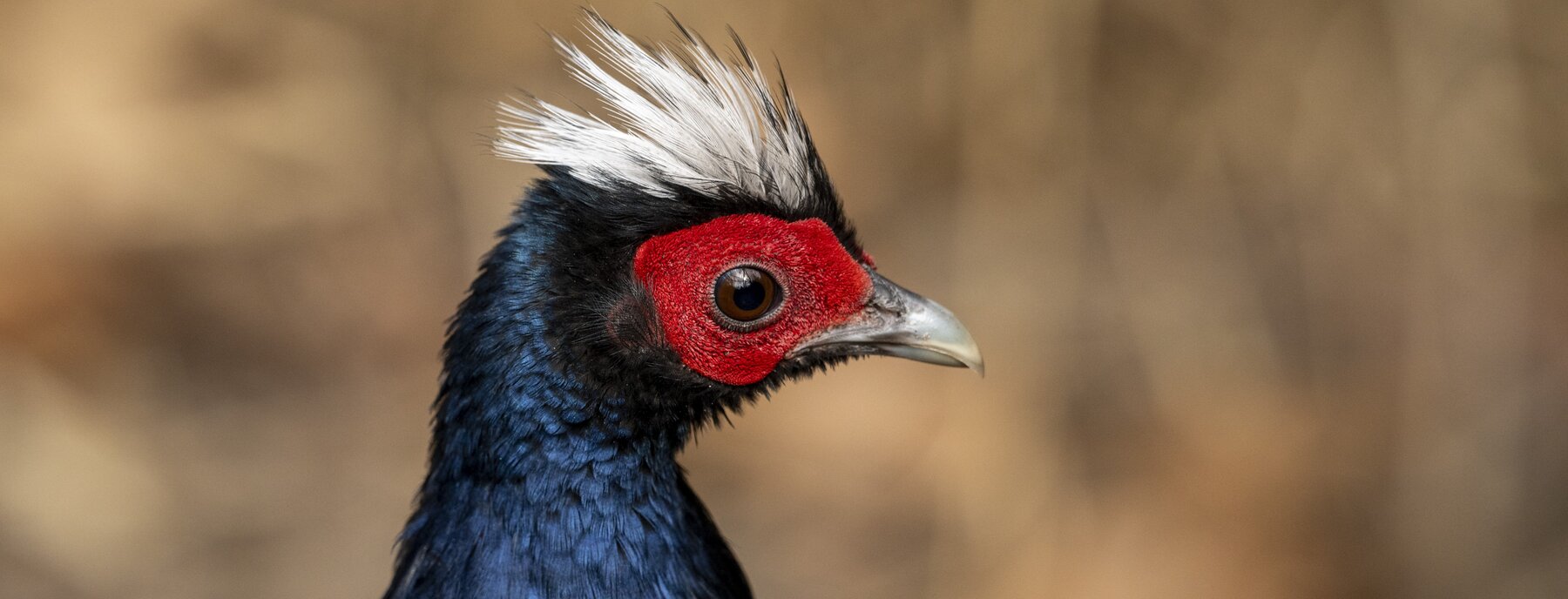
Vietnamese pheasant
Zoo Berlin is helping to save the Vietnamese pheasant in Vietnam.
Project facts
- Project name
Reintroduction of Vietnamese pheasants in Vietnam
- Species
Vietnamese pheasant (Lophura edwardsi)
- IUCN threatened status
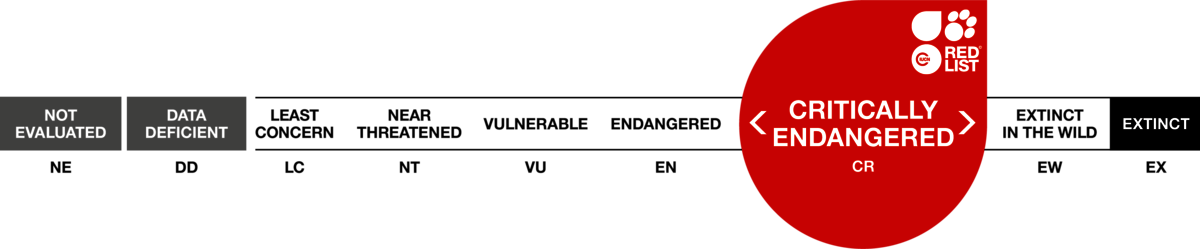
Critically Endangered (likely extinct in the wild) (CR)
- Project location
Quang Binh province, Vietnam
- Greatest threat
Loss of habitat
- Response
Setting up protected areas for reintroduction into the wild; establishing a breeding group
Threat Categories of IUCN
Life in the care of humans
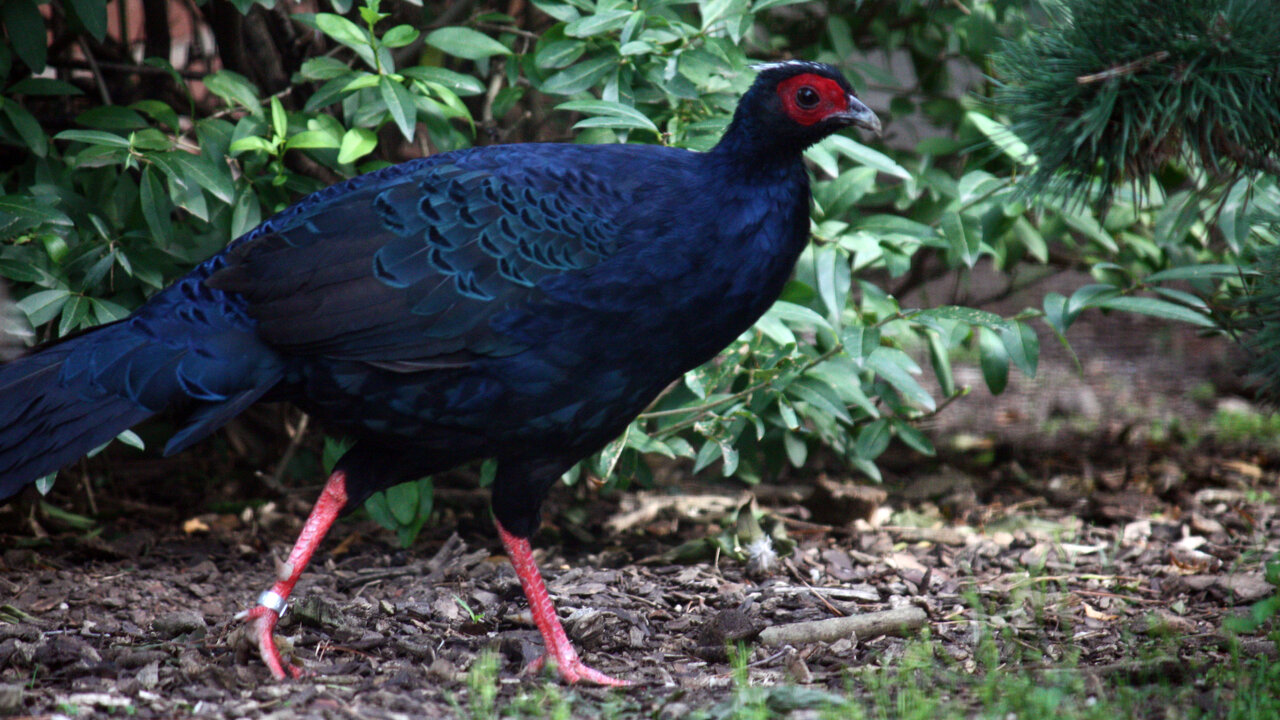
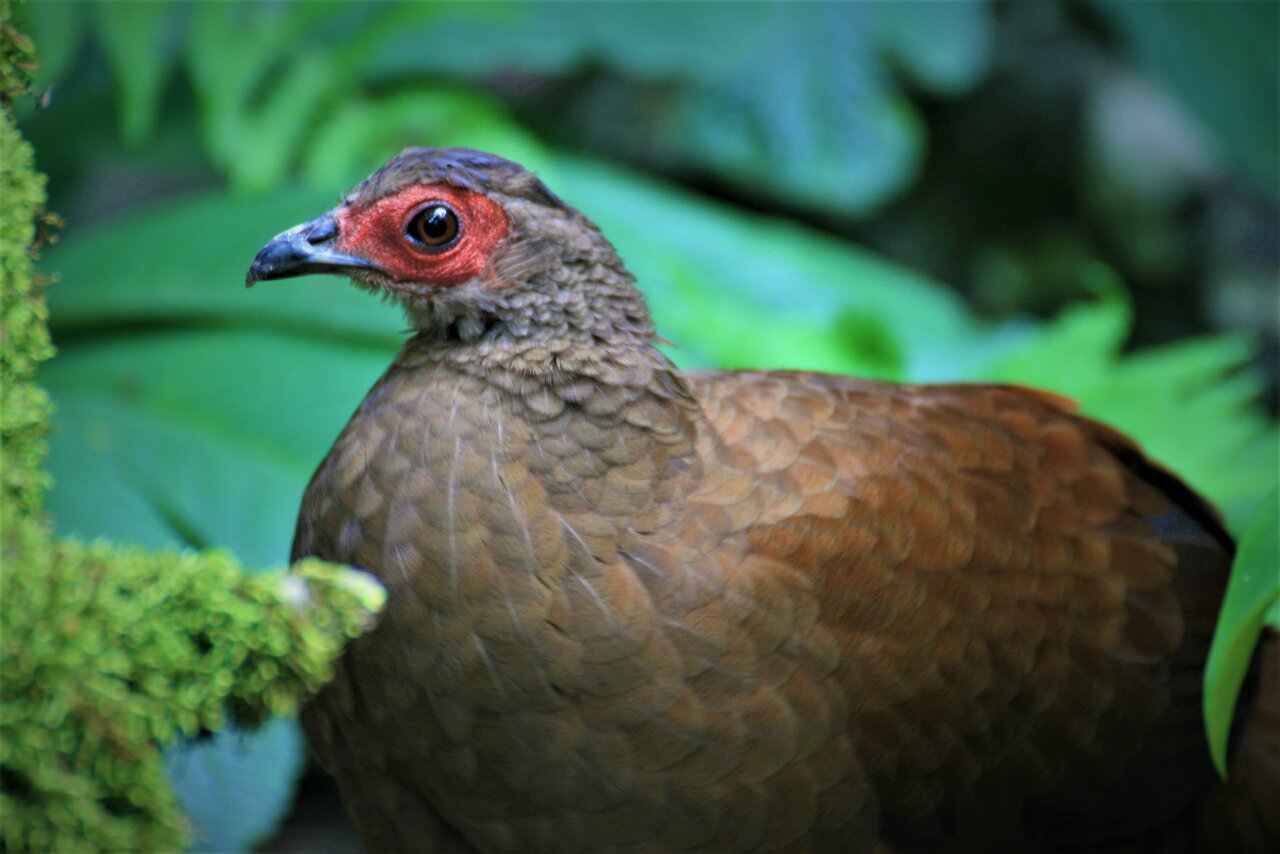
In the 1920s, at least 14 pairs of Vietnamese pheasants were captured in Vietnam and taken to France. In the almost 100 years that have passed since then, this small population has fared well in the care of humans and has grown to include more than 1,000 birds worldwide. Zoo Berlin received its first Vietnamese pheasant in 1938, but only got to keep it for a short time. In 2017, after more than 70 years, this rare species returned to the Zoo.


Missing in the wild
The last sighting of a wild Vietnamese pheasant in Vietnam was recorded in the year 2000. Concerns for the survival of this endemic species prompted a survey of the last remaining areas of suitable habitat in the Quảng Bình and Quảng Trị provinces, using camera traps to try and spot any remaining individuals. The survey confirmed scientists’ worst fears: the wild population in Vietnam seems to have already been wiped out. The Vietnamese pheasant has therefore been on the IUCN Red List since 2012, classified as “Critically Endangered”, since 2024 with the designation 'Probably Extinct in the Wild'.
The impact of war
During the Vietnam War, which lasted some 20 years, the embattled demilitarised zone lay in the province of Quảng Trị – right in the middle of the Vietnamese pheasants' habitat. This region witnessed the heaviest fighting, including the aggressive use of chemical weapons such as the highly toxic defoliant Agent Orange. The herbicide was sprayed across fields and forests, with catastrophic consequences for the environment and the people living there. Those consequences are still felt to this day.
Forests turn to fields
After the Vietnam war came to an end, the growing human population and rising demand for agricultural produce resulted in the steady decline of the Vietnamese pheasants’ habitat. Areas of restored forest may look intact from the outside, but the creatures that once inhabited them have been wiped out by poachers. It is suspected that the last wild Vietnamese pheasant must have fallen victim to a poacher’s trap. Habitat loss and hunting have very likely resulted in the extinction of this species in the wild.
Protecting precious habitat
Zoo Berlin has teamed up with Viet Nature, the World Pheasant Association, and BirdLife International to launch a project to restore and protect former natural habitats in Vietnam, with a view to eventually reintroducing captive-bred Vietnamese pheasant back into the wild. In 2015, Viet Nature took the first step and signed a 30-year lease agreement for 768 hectares of forest land within the Khe Nuoc Trong area. This area was once the Vietnamese pheasants’ primary habitat and is one of the planned reintroduction sites for the future.
Bring Back Blue
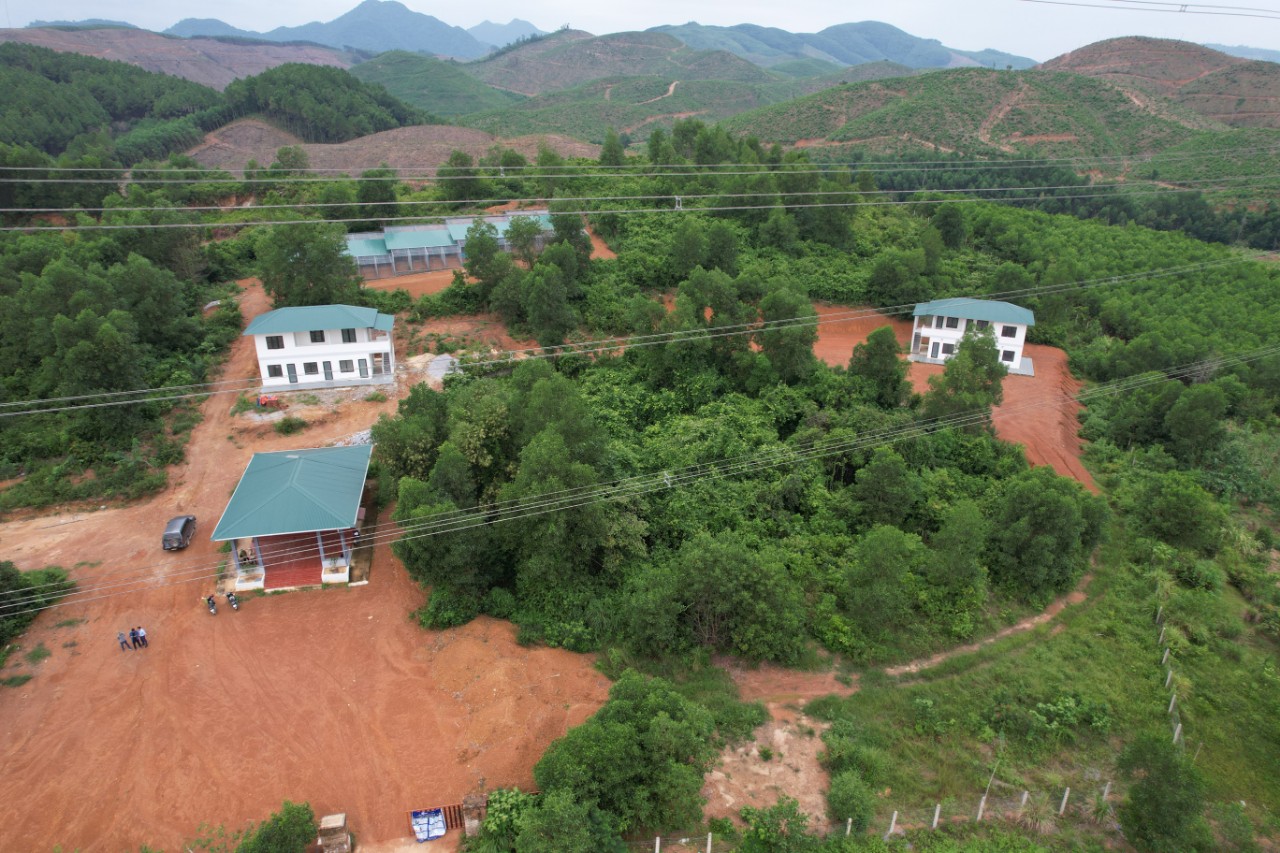
The establishment and coordination of a breeding program is an important step towards reintroduction. It is possible that some of the animals still living today are no longer purebred Vietnamese pheasants. Therefore, genetic analyses are being conducted in European zoos on behalf of the European Endangered Species Programme (EEP) to determine which animals are best suited for further breeding. To enable local breeding in Hanoi, four animals were transferred from Europe to Hanoi in 2015 to produce offspring with the last remaining Vietnamese pheasants. With the completion of the Rare Pheasants Breeding Center in Le Thuy, Quang Binh Province, in 2024, it is now possible to bring additional breeding pairs from European zoos to Vietnam.
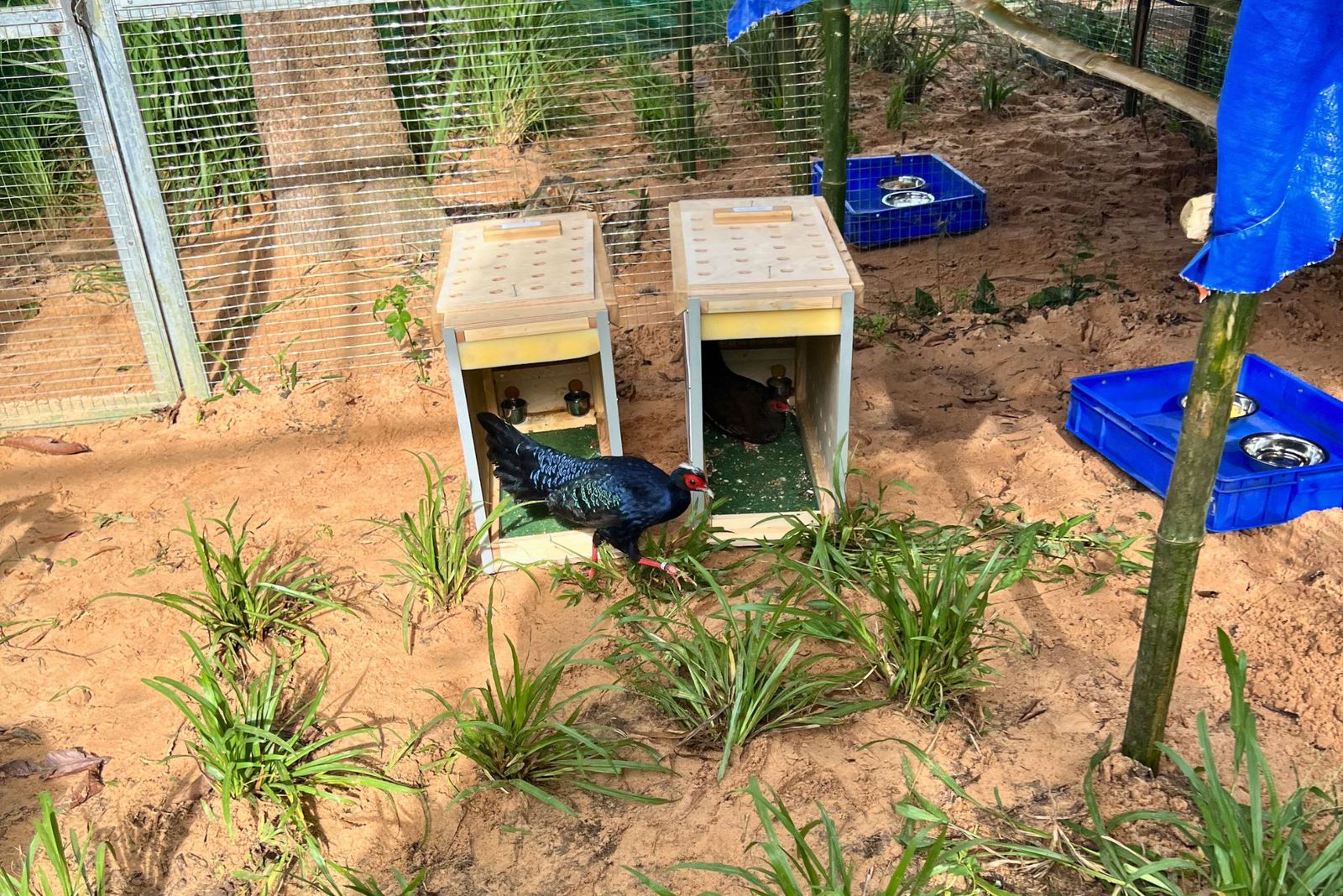
In 2026, the time had finally come. As part of the international initiative “Bring Back Blue”, a group of 20 Vietnam pheasants from the EEP), including birds from Zoo and Tierpark Berlin, was transported by cargo aircraft from Berlin to Vietnam. The birds travelled in specially designed transport crates and were accompanied throughout the journey by experts from Tierpark Berlin and Vietnamese partners, who ensured their care and well-being during the transport. The offspring hatched in RPBC are to be released into suitable forest areas within the Khe Nuoc Trong region.




Back to the forests of Vietnam
The actual reintroduction of the Vietnam pheasants hatched in Vietnam requires a great deal of time and patience. The long-term protection of the birds from poachers is the greatest challenge. The field team patrols the forest areas and removes the snares that are deadly to the pheasants and other wildlife.
Photos: © Khe Nuoc Trong Project
© Jon A Juarez